
Quick Summary
Luxury heart wreaths suit modern interiors because their soft, organic curve contrasts with clean, straight lines while acting as a single focal point. Choose the size by measuring the wall or door, aiming for a wreath that fills about one-third to one-half of the wall width.
- Luluthia offers luxury heart wreaths in three sizes, approximately 24, 26 and 28 inches in diameter.
- Use a wreath that fills roughly one-third to one-half of the width of the wall behind it.
- Limit the floral palette to two or three tones, with one dominant bloom, one supporting bloom and a green base.
- Hang the wreath with its center at about eye level, roughly 57 to 60 inches from the floor, unless above furniture.
- Leave about 6 to 10 inches between furniture top and the bottom of the wreath when hanging above it.
Table of Contents
- Why Luxury Heart Wreaths Work in Modern Interiors
- Choosing the Right Heart Wreath Size and Frame
- Selecting Florals and Greenery for a Refined Look
- Modern Floral Decor Trends That Suit Heart Wreaths
- Color Palettes and Finishes for Contemporary Spaces
- Placement Ideas for Walls, Doors and Living Areas
- How to Choose Centerpiece Flowers for Table Size
- Book Your Heart Wreath Consultation with Luluthia
- Frequently Asked Questions
Why Luxury Heart Wreaths Work in Modern Interiors
Luluthia Design Inc creates fresh floral art for homes, and the heart wreath is one of the pieces we are often asked about. A luxury heart wreath is a full, fresh-bloom piece built on a heart-shaped frame, designed to hang as wall art rather than sit as a seasonal ornament.

Modern rooms tend to be clean, neutral and open. A heart wreath adds a soft, organic shape to a space with straight lines.
Luluthia's heart wreaths are made with fresh blooms and are available in three sizes, approximately 24, 26 and 28 inches in diameter.
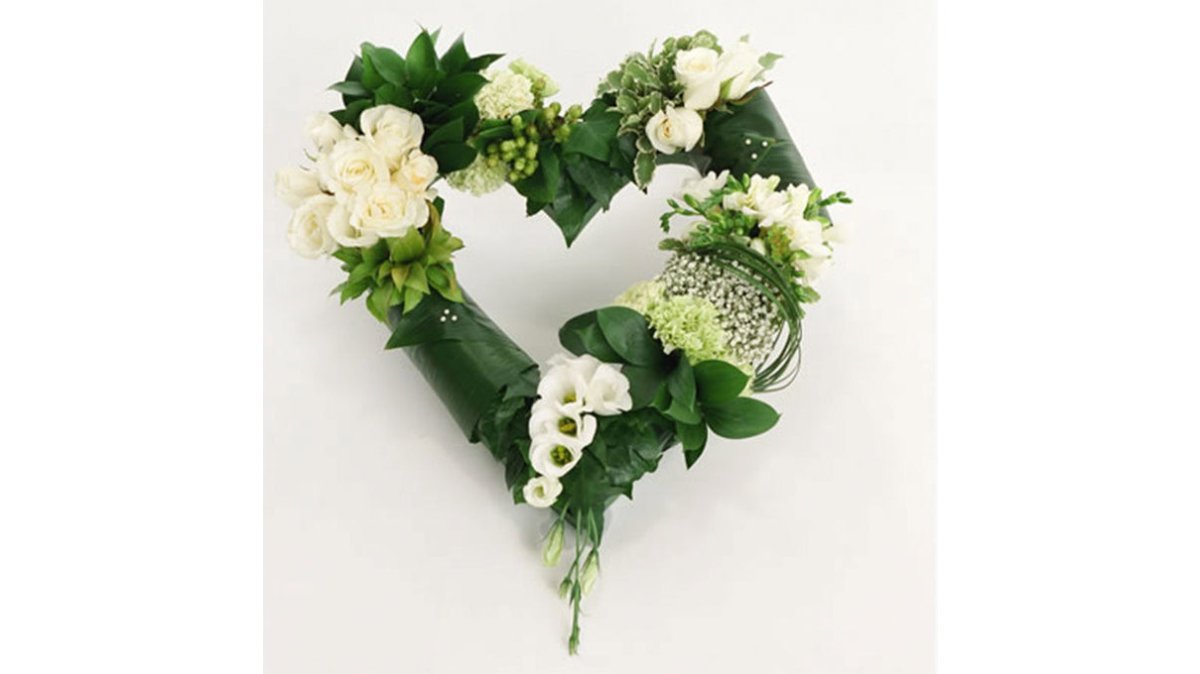
Watch out: fresh flowers vary with the season, so the exact blooms in your piece may differ from the photos.
Choosing the Right Heart Wreath Size and Frame
The right size matters when choosing a heart wreath. A wreath that is too small disappears on a large wall, and one that is too large overwhelms a narrow door or hallway.
Start by measuring the wall or door where the wreath will hang. Then choose from our three sizes:
- 24 inches: best for smaller walls, powder rooms and narrow entry doors
- 26 inches: a balanced choice for most interior doors and feature walls
- 28 inches: made for large open walls, staircases and statement entrances
Matching Wreath Size to Wall and Door Proportions
Use a simple rule of thumb: the wreath should fill roughly one-third to one-half of the width of the wall behind it. Leave enough open space on each side so the piece reads as art, not as something squeezed into place.
For doors, check the clearance first. A heart wreath should sit comfortably inside the door panel with room to close the door freely. If you are unsure, hold a piece of paper or painter's tape at the planned size on the wall for a few days before you commit.
The article gives three sizes and a placement rule, which can be scanned as a quick reference:
| Size | Best for | Key note |
|---|---|---|
| 24 inches | Smaller walls, powder rooms, narrow entry doors | Fits small spaces without overwhelming them |
| 26 inches | Most interior doors and feature walls | Balanced choice for most rooms |
| 28 inches | Large open walls, staircases, statement entrances | Made for big spaces and distance viewing |
| Width rule | Wreath fills about one-third to one-half of the wall | Leave open space on each side |
Selecting Florals and Greenery for a Refined Look
Flower choice sets the tone. For a refined modern look, we recommend limiting the palette to two or three tones and mixing textures rather than adding more colors. A typical balance is one dominant bloom, one supporting bloom and a green base.
Common combinations include:
- White roses with lisianthus and green foliage for a crisp, minimalist look
- Yellow roses with white lisianthus and purple freesia for a brighter, softer contrast
- Pink and purple roses with carnations for a richer, more traditional feel
Greenery does more than fill space. Leaves give the eye a place to rest and make the blooms look fuller. Choose foliage with a clear shape, not just filler, since leaves are what people see up close.
For a deeper look at long-lasting options, see our guide to flowers that hold up well in decor and our current collection.
Modern Floral Decor Trends That Suit Heart Wreaths
Current modern floral decor leans toward fewer, bigger, more deliberate pieces. Instead of many small arrangements, homeowners are choosing one statement piece per room. The heart wreath fits this trend well because it works as a single, sculptural object.
Two trends stand out:
- Single-focal-point styling: one large wreath on one wall, with the rest of the room kept simple
- Soft organic shapes: curves and rounded forms that contrast with modern architecture
A heart wreath belongs in both. It creates a clear focal point and brings a soft curve into a room built on straight lines. Pair it with neutral walls and simple furniture and let the piece do the talking.
A heart wreath in a bright living area or entryway tends to show its blooms and greenery in detail against a light background.
Color Palettes and Finishes for Contemporary Spaces
Color is where most wreaths either blend in or stand out. Match the wreath to the room, not the other way around. The most useful approach is to start from the room's existing palette and choose a wreath that either echoes it or introduces one deliberate accent.
Modern interiors tend to fall into a few recognizable palettes. Each one calls for a different wreath strategy:
- Japandi (warm neutrals, black accents, natural wood): lean on cream, ivory, and soft white blooms with muted green foliage. Avoid bright saturated colors; the wreath should read as texture, not as a color event. White roses, lisianthus, and eucalyptus work well here.
- Minimalist (white, grey, black, one accent): use a near-monochrome wreath and let shape carry the piece. A single bloom type in one tone, such as all-white roses with silver-grey foliage, keeps the wall calm. If you want an accent, repeat the room's one accent color in the wreath so the two connect.
- Scandi (light wood, white, soft blue or sage): soft blues, sage greens, and blush pinks sit naturally against pale wood and white walls. Mix two tones rather than three so the piece stays airy.
- Warm contemporary (brass, linen, terracotta, walnut): yellow, blush, soft orange, and deep burgundy blooms pick up the warmth in the room. Pair with foliage that has a slightly olive tone rather than bright green.
A simple mechanism for choosing: pull the three dominant colors from the room (wall, largest furniture piece, and one accent), then decide whether the wreath should repeat two of them or introduce a third. Repeating two colors makes the wreath feel built-in; introducing a third makes it a focal point.
Finishes matter as much as color. Matte walls, natural textures, and brushed metals complement fresh florals because they absorb light and let the blooms show detail. Glossy, high-contrast surfaces can make the blooms look busy, so keep the backdrop simple.
Watch out: fresh flowers vary with the season, so a color you see in a photo may not be available in the exact bloom you expect. Plan the palette around tones and textures, not one specific flower, and confirm the seasonal range with your florist before you commit.
Placement Ideas for Walls, Doors and Living Areas
Placement determines whether a wreath feels planned or accidental.
Start with the room's function. A wreath on a wall that people walk past daily should sit at eye level and read as a single object.
Here are the placements that work best, with the reasoning behind each:
- Front entry door: a welcoming first impression, best in the 26 or 28 inch size. Check that the wreath sits inside the door panel with room for the door to close freely, and that it does not block the peephole or handle.
- Feature wall above a console table or sofa: centered on the furniture, not on the wall, so the piece and the furniture read as one composition. Leave about 6 to 10 inches between the furniture top and the bottom of the wreath.
- Dining room wall: a quiet focal point at eye level, ideally on the wall that guests face when seated. Keep the wreath in the same palette as the table centerpiece but at a different scale so the two do not compete.
- Bedroom headboard wall: a soft, romantic accent above the bed. Center it on the bed, not the wall, and keep the bottom of the wreath at least 6 inches above the headboard so it does not crowd the pillows.
- Living room side wall or stairwell: a 28 inch piece works well on a large open wall or above a staircase landing, where it can be seen from a distance and does not need to relate to furniture.
Hang the wreath so its center sits at about eye level, roughly 57 to 60 inches from the floor, unless it sits above furniture.
A common pattern in modern interiors is to use one wreath per room as the single organic shape in an otherwise rectilinear space.
Watch out: a wreath hung too high or too low is the most common placement error.
How to Choose Centerpiece Flowers for Table Size
If you are styling a dining table alongside a wall wreath, keep the two pieces in the same palette but at different scales. The wall wreath is the statement; the centerpiece is the supporting act.
For table centerpieces, a practical guide:
- Small tables (up to 4 seats): a low, compact arrangement that will not block sight lines
- Medium tables (4 to 6 seats): a longer, low arrangement that runs down the center
- Large tables (8 or more seats): multiple smaller arrangements spaced along the table
Keep any centerpiece low enough that guests can see across the table. Tall arrangements that block eye contact feel formal and awkward for everyday dining.
Book Your Heart Wreath Consultation with Luluthia
A heart wreath is easiest to get right when you plan the size, palette and placement together. Our team can help you choose the right piece for your wall or door, and we can talk through how it fits with your room. Explore our current heart wreath collection to see the sizes and designs available.
Ready to add a luxury heart wreath to your home? Luluthia Design Inc crafts fresh, modern floral art built to fit your space. Start with the size and palette you love, and let the wreath do the rest.
Frequently Asked Questions
How do you style a heart wreath for a modern home interior?
Start with a clean backdrop and a single focal point. Choose a heart wreath whose tones echo one accent in the room, such as a muted sage or warm ivory, and hang it at eye level on a plain wall or door. Keep surrounding accessories minimal, with one or two sculptural pieces, so the wreath reads as art rather than seasonal decor. Luluthia Design's heart wreaths, priced from $249.00 to $295.00 CAD depending on the design, are sized in three diameters (approximately 24, 26 and 28 inches) so you can match proportion to your wall or door.
What materials define a luxury heart wreath?
A luxury heart wreath is built from fresh blooms and carefully selected greenery arranged densely enough to look full from every angle. Luluthia Design's heart wreaths use fresh blooms, with the deluxe size shown in the gallery and regular and supreme sizes following the same design at a different flower quantity. Flowers vary with the season, and some may be replaced by an equivalent bloom at the time of order.
Can heart-shaped decor look sophisticated in a minimalist space?
Yes, when the shape is treated as a sculptural element rather than a decorative motif. Pick a heart wreath in a restrained palette, avoid extra ribbons or novelty ornaments, and give it generous negative space around it. A single heart wreath on a bare wall often feels more deliberate than several smaller pieces grouped together.
Where should you hang a luxury heart wreath for maximum impact?
Hang it where it will be seen as you enter a room or approach a door, typically centered at about eye level. On a wall, let the wreath be the only major object in its zone. On a door, consider the door's width and hardware so the wreath sits balanced rather than crowded against the handle.
