
Table of Contents
- Why Luxury Floral Decor Transforms a Home
- Flower Arrangement Ideas for Living Room
- Preserved Flower Arrangements for Home
- How to Style Flowers in a Home
- Sustainable Luxury Floral Design Trends
- Selecting Premium and Seasonal Blooms
- Care and Longevity of Your Luxury Arrangements
- Frequently Asked Questions
Last Updated: October 12, 2026
Why Luxury Floral Decor Transforms a Home
Luxury floral decor for home shapes how you feel when you walk through the door, signals taste to visitors, and transforms ordinary spaces into galleries of living art.
The difference between a standard arrangement and true luxury floral decor lies in composition, material quality, and intentional placement, scale, color relationships, and how light plays across petals and foliage.
Fresh flowers fade, but preserved arrangements and high-quality fresh florals, styled with intention, create lasting visual impact.
Flower Arrangement Ideas for Living Room
Your living room is where luxury floral decor for home makes its loudest statement.
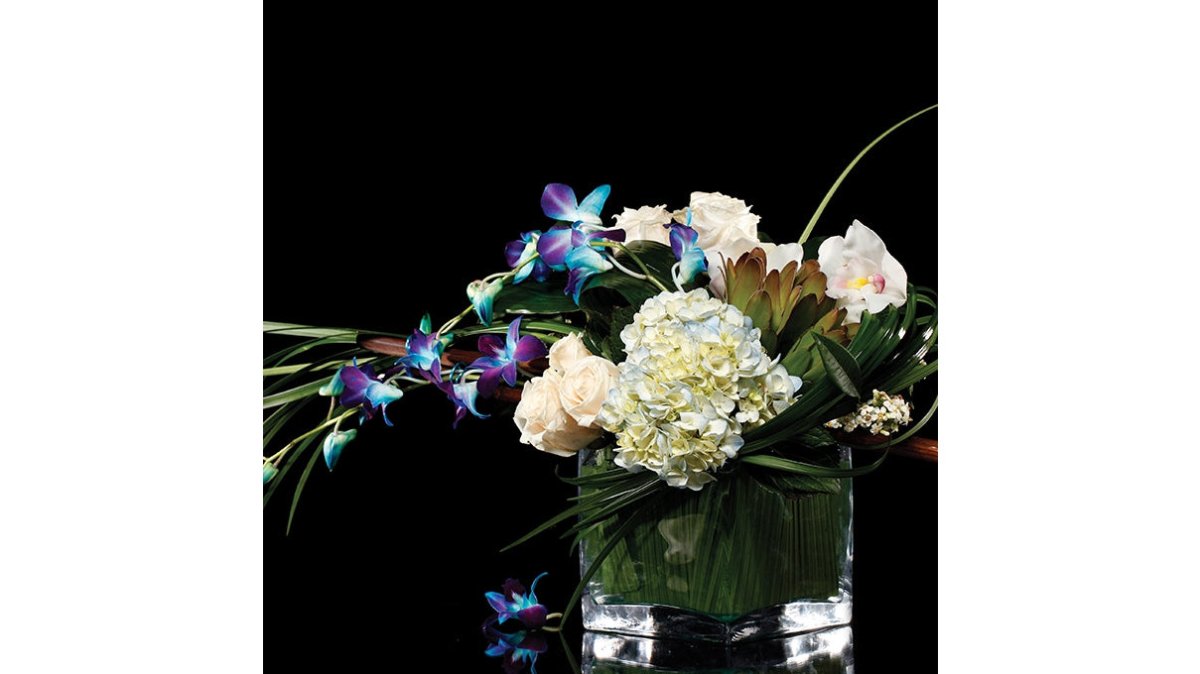
Statement Arrangements for Impact
A statement arrangement demands attention without overwhelming the space. Think tall, architectural pieces that draw the eye upward: roses paired with dendrobium orchids and textured greenery.

Scale matters: a statement arrangement should be proportional to your furniture.
Placement is equally critical. Position statement arrangements where they catch natural light, near a window or on a focal console table, so light reveals new colors and textures throughout the day.
Intimate Centerpieces for Seating Areas
Not every arrangement needs to dominate. Intimate centerpieces work beautifully on side tables, coffee tables, or consoles where people gather, lower in profile, allowing conversation to flow while adding richness.
The Luluthia Design Inc BLOSSOM CENTREPIECE exemplifies this approach: a seamless no-vase table centrepiece with roses, spray roses, hydrangeas, orchids, and designer greens, designed to sit flat and add visual interest without blocking sightlines.

Color becomes more intimate at this scale. Softer palettes, blush and cream, sage and white, burgundy and gold, create warmth, while foliage softens the composition and extends interest beyond the focal flowers.
Preserved Flower Arrangements for Home
Preserved flowers last longer, require minimal care, and offer design flexibility fresh arrangements cannot match.
Longevity and Luxury Value
Preserved flowers are real flowers treated to maintain their structure, color, and texture for months or years.
This longevity changes the economics of luxury floral decor: a preserved arrangement becomes a permanent interior element rather than a temporary display.
Preserved arrangements also eliminate waste: the arrangement you buy today can stay with you through moves, renovations, and life changes.
Design Flexibility Across Seasons
Fresh arrangements shift with seasonal availability; preserved flowers free you from that constraint. Order an arrangement in June with peonies and garden roses, knowing exactly what you'll receive in December.
This consistency allows for intentional interior design: plan a room's color palette knowing your arrangement will anchor it reliably. Preserved arrangements also work where fresh flowers would be impractical, low-light corners, shelving units, or areas with temperature fluctuations.
How to Style Flowers in a Home
Styling flowers is composition, a set of decisions you make in order: choosing a palette, building the arrangement stem by stem, scaling it to a room, and fixing what looks off.
Composition Principles: Color, Texture, and Scale
Color is the first decision. Complementary palettes create drama, analogous palettes feel restful, and monochromatic arrangements read as sophisticated.
Texture adds dimension: smooth rose petals next to feathery asparagus fern, spiky thistle beside soft hypericum berries.
Scale determines how the arrangement functions in its space. A common guideline: height roughly 1.5 to 2 times the container, width no more than one-third of the surface it sits on.
Step-by-Step: Building a Balanced Arrangement
A luxury arrangement is built, not assembled, each layer supports the next.
- Condition the stems. Strip all leaves below the water line, cut each stem on a 45-degree angle with a sharp blade (not scissors, which crush the xylem), and place stems in cool water for at least two hours. This is the biggest factor in how long the arrangement holds.
- Choose and prepare the vessel. Match the vessel's weight to the arrangement's mass. A tall, heavy arrangement needs a weighted base or floral foam alternative; a low centerpiece can use a shallow bowl with a pin holder or a chicken-wire grid taped across the mouth.
- Establish the silhouette. Place your tallest stems first, angled slightly outward, to set height and width. Rotate the vessel as you work so the arrangement reads from every side.
- Place focal blooms. Add your focal flowers (roses, peonies, orchids) in odd numbers, grouped rather than scattered. Three or five focal stems clustered reads more intentional than seven spread evenly.
- Fill with secondary blooms. Spray roses, carnations, and hydrangeas bridge focal blooms and greenery. Keep them slightly lower than the focal flowers so the eye lands on the stars.
- Add foliage last. Greenery softens transitions, hides mechanics, and creates negative space. Let some stems trail below the rim for a garden-gathered feel.
- Step back and edit. Remove anything that blocks a focal bloom or crosses a line awkwardly. The final step is subtraction, not addition.
Troubleshooting Common Problems
- The arrangement looks flat. You likely have too few textures or everything is at the same height. Add one feathery element and one round element, and vary the heights by at least a third.
- It looks top-heavy or is tipping. The vessel is too light for the mass above the rim. Move to a heavier vessel or trim the tallest stems by 10-15%.
- The colors clash. Reduce to a single dominant hue and let foliage and a neutral bloom carry the rest.
Room-by-Room Placement Strategy
Living rooms benefit from statement arrangements that anchor the space, typically on a console, side table, or coffee table visible from seating areas.
Entryways are the first impression.
Bedrooms call for smaller, softer arrangements.
Dining tables work best with lower arrangements that don't block sightlines.
Bathrooms are often overlooked. A small preserved arrangement on a shelf or vanity adds luxury without the humidity concerns that stress fresh flowers.
Sustainable Luxury Floral Design Trends
Luxury and sustainability are no longer opposing forces. The most discerning clients now expect both.
Seasonal Sourcing and Ethical Blooms
Seasonal flowers are fresher, more affordable, and require less transportation. Peonies in spring, garden roses in summer, dahlias in fall, amaryllis in winter, working with what's in season creates arrangements authentic to the moment.
Ethical sourcing matters increasingly. Flowers grown locally or from farms with strong labor practices carry different weight than commodity blooms shipped globally. Luluthia Design Inc ensures luxury floral decor reflects values beyond aesthetics.
Preserved and Dried Florals as Eco-Conscious Choices
Preserved flowers reduce waste by extending each arrangement's lifespan, and thoughtfully sourced dried florals offer similar benefits. Pampas grass, dried roses, preserved eucalyptus, and air-dried hydrangeas create arrangements that last indefinitely.
These materials also open design possibilities unavailable with fresh flowers, working beautifully in shadow boxes, on shelving, or as wall installations that blur the line between arrangement and art.
Selecting Premium and Seasonal Blooms
Choosing flowers for luxury arrangements requires understanding which blooms deliver impact and which support the design.
Focal Flowers That Command Attention
Focal flowers are the stars. Roses, peonies, orchids, and garden roses have the size, color depth, and presence to anchor an arrangement, distinctive enough to draw attention, refined enough for luxury design.
Dendrobium orchids offer exotic elegance, roses provide timeless sophistication, and peonies deliver romantic abundance. The choice depends on the mood you're creating and the room's aesthetic.
Luluthia Design Inc's EXOTICA arrangement combines roses, dendrobium orchids, carnations, and cymbidium orchids, multiple focal flowers working in concert.
Foliage and Greenery as Design Elements
Foliage is not filler. Eucalyptus brings texture and silver tones, ruscus adds architectural line, salal provides lush density, and Italian ruscus offers feathery interest.
The right foliage extends an arrangement's perceived size without adding cost, softening transitions between focal flowers and creating negative space that lets each bloom breathe. In luxury arrangements, foliage is chosen as deliberately as the flowers.
Care and Longevity of Your Luxury Arrangements
Care is where the investment is protected or lost. A well-conditioned fresh arrangement can hold its shape; a neglected one can collapse in three days. Preserved arrangements are more forgiving but still have failure modes worth knowing.
Fresh Arrangement Care Routine
- Day 1: Re-cut every stem on a 45-degree angle, remove all foliage below the water line, and place the arrangement in cool water with a floral preservative. Preservative is not optional for luxury blooms.
- Every two days: Change the water entirely, re-cut about 1 cm off each stem, and remove declining blooms or leaves. Declining material releases ethylene, which accelerates the decline of everything around it.
- Daily: Top up water to the rim. Most arrangements drink more than people expect in the first 48 hours.
Preserved Arrangement Care Routine
Preserved arrangements need minimal care and no water. Dust gently with a soft brush or a hairdryer on the coolest, lowest setting held at a distance. Keep them away from direct sunlight, which fades color, and from humid rooms where stems soften and lose structure. In dry environments they last years; in humid spaces, months to a year or more.
Diagnosing Problems
- Drooping heads within a day or two: Usually an air embolism from a stem cut with dull tools or left out of water too long. Re-cut and rehydrate in cool water.
- Cloudy water or a sour smell: Bacterial growth. Change the water, re-cut the stems, and clean the vessel with hot soapy water before refilling.
- Yellowing foliage while blooms still look fine: Leaves below the water line are rotting. Pull the arrangement, strip the submerged foliage, and re-cut.
Proper care, changing water or simply dusting, is a small ritual that keeps your luxury floral decor present in your daily awareness.
| Arrangement Type | Best For | Maintenance | Lifespan |
|---|---|---|---|
| Fresh arrangements | Living rooms, entryways, special occasions | Water changes every 2 days, stem trimming, cool placement | 7-14 days |
| Preserved arrangements | Long-term decor, bedrooms, low-light spaces | Dust occasionally, keep dry and out of direct sun | 6-12 months |
| Seasonal blooms | Budget-conscious luxury, authentic styling | Standard fresh care | 7-14 days |
| Statement pieces | Focal points, high-impact design | Varies by type | Varies |
Frequently Asked Questions
How do you style flowers to make a home look luxurious?
Luxury floral decor relies on three core principles: intentional color harmony, balanced composition, and premium vessel selection. Choose a focal flower like roses or dendrobium orchids, layer in complementary blooms and textured foliage, and arrange at varying heights to create visual depth. Place arrangements where they command attention, on entry tables, mantels, or as living room centerpieces. The arrangement itself becomes an art piece, not an afterthought. Luluthia Design's CHRYSTAL arrangement ($100) exemplifies this approach, combining roses, dendrobium orchids, and garden greens in a curated glass or ceramic vase.
Are fresh or preserved flowers better for home decor?
Fresh flowers offer immediate vibrancy and fragrance, making them ideal for special occasions and short-term displays. Preserved flower arrangements last without water or maintenance, making them cost-effective over time and perfect for permanent home installations. Fresh blooms suit dining tables and entryways where guests notice them immediately. Preserved arrangements work best in low-traffic areas, offices, or as long-term investment pieces. Many homeowners use both: fresh flowers for seasonal rotation and preserved arrangements as permanent luxury decor anchors.
What flowers work best for elegant home decor?
Roses, dendrobium orchids, hydrangeas, and spray roses form the foundation of elegant arrangements. These flowers offer longevity, visual impact, and versatility across color palettes. Orchids bring contemporary sophistication; roses convey timeless romance; hydrangeas add volume and texture; spray roses provide delicate detail. Designer greens and foliage create breathing room and balance. Luluthia Design's EXOTICA arrangement ($85) combines roses, dendrobium orchids, carnations, and cymbidium orchids for dynamic visual interest, while THE BLOSSOM CENTREPIECE ($95) layers roses, spray roses, hydrangeas, orchids, and designer greens for maximum impact.
How can you make floral decor more sustainable?
Choose preserved arrangements that eliminate weekly water waste and frequent replacement cycles. Opt for seasonal blooms sourced locally rather than imported flowers requiring long-distance transport. Select flowers grown using ethical, pesticide-conscious practices. Preserved florals and dried arrangements reduce waste while lasting. Combine fresh and preserved pieces: rotate fresh seasonal flowers while maintaining preserved arrangements as permanent decor. This hybrid approach balances luxury with environmental responsibility, allowing you to enjoy beautiful floral art without guilt.