
Last Updated: October 23, 2026
Quick Summary
To choose wedding florist style, start by identifying your core aesthetic from five main options: classic elegance, romantic garden-style, boho organic, modern minimalism, or rustic charm. Create a mood board with 20-30 inspiration photos to clarify your vision, then find a florist whose portfolio and design philosophy align with your chosen style and venue.
- The five primary floral styles are classic, romantic, boho, modern, and rustic, each suited to different wedding themes and venues.
- Gather 20-30 inspiration photos and group them to identify 2-3 clear aesthetic directions before meeting with a florist.
- Match your floral style to your venue's architecture and existing décor for cohesive design.
- Choose your color palette from flowers naturally in season for your wedding date to save money and ensure freshness.
- Evaluate a florist's portfolio for consistency in design philosophy and technical skill, not just beautiful individual photos.
Table of Contents
- Define Your Wedding Floral Style Before Meeting a Florist
- Match Your Floral Style to Your Venue and Wedding Theme
- Choose Your Color Palette and Seasonal Flowers
- Evaluate a Florist Portfolio: Beyond Beautiful Photos
- Questions to Ask Your Wedding Florist During Consultation
- Luxury Wedding Floral Design Trends for 2026
- Sustainable and Accessible Floral Choices
- Finalizing Your Florist Choice and Timeline
- Frequently Asked Questions
Define Your Wedding Floral Style Before Meeting a Florist
When you choose wedding florist style, it starts with knowing what you actually want. Too many couples walk into consultations with vague ideas and contradictory Pinterest boards.
Your floral style sets the tone for your entire wedding, influencing how guests perceive the space, how photos look, and whether flowers complement or clash with your venue.
Start by identifying your core style. Or does romantic style appeal to you more, with soft textures, garden-style blooms, and flowing greenery? Boho weddings embrace wildflowers, dried elements, and organic shapes. Modern style favors clean lines, bold colors, and architectural flowers. Rustic style combines natural textures with earthy tones and unexpected greenery.

Don't try to blend all five. Pick one primary style and one secondary influence if needed.
Identify Your Aesthetic: Classic, Romantic, Boho, Modern, or Rustic
Classic style uses structured symmetry and high-quality blooms like roses, hydrangeas, and calla lilies in tight, organized formations.
Romantic style is softer and more garden-like. Peonies, garden roses, ranunculus, and spray roses mix with abundant greenery in full, slightly loose arrangements.
Boho style celebrates nature's imperfection. Wildflowers, grasses, branches, and dried elements create an organic, asymmetrical look with unexpected textures.
Modern style is minimalist and bold: fewer stems, clean lines, and sometimes just one or two flower types in striking colors. Architectural flowers like anthuriums or proteas work well here.
Rustic style blends natural textures with farmhouse charm.
Create a Mood Board with Inspiration Photos
Gather 20-30 photos of floral arrangements you love. Use Pinterest, Instagram, wedding blogs, and florist websites.
Once you have your collection, look for patterns. Do most images feature soft pastels or bold jewel tones?
Group similar images together. You'll likely see 2-3 clear aesthetic directions emerge. This is your visual language.
When you meet with a florist, bring these photos, but don't expect them to replicate every image.
Match Your Floral Style to Your Venue and Wedding Theme
Your venue shapes what's possible with flowers. A grand ballroom can handle dramatic, abundant arrangements. An intimate garden wedding needs restraint so flowers don't overwhelm the space.
Walk through your venue and note the architecture, lighting, and existing décor.
Your wedding theme also matters. A tropical destination wedding needs different flowers than a winter celebration.
The best florists adapt your style to your specific space.
Choose Your Color Palette and Seasonal Flowers
Your color palette determines the mood instantly. Soft pastels feel romantic, jewel tones feel luxurious and dramatic, neutrals feel elegant and timeless, and bold brights feel modern and energetic.
Start with 2-3 primary colors and 1-2 accent colors. Too many colors create chaos. Your florist can suggest which flowers naturally come in your chosen colors.
But here's where seasonal availability matters. Peonies are stunning but only available May through June. Certain roses are more affordable in winter.
Balance Personal Color Preferences with Flower Availability
Don't fall in love with a specific flower if it's not in season for your wedding date.
Ask your florist: "What flowers are naturally available in [your month]?" Then build your palette around those options.
If you're set on an out-of-season flower, expect higher costs.
A smart approach: choose your primary flowers from what's in season, then add one special accent flower if you want something specific.
Plan for Seasonal Substitutions Without Compromising Your Vision
Discuss substitutions with your florist upfront. If peonies aren't available, what's the next-best option? Garden roses? Ranunculus? A good florist has backup options that match your aesthetic.
The key is substitutions that feel intentional, not like a compromise.
Ask your florist to show you photos of arrangements using the backup flowers. Make sure you approve the look before your wedding day.
Evaluate a Florist Portfolio: Beyond Beautiful Photos
Every florist has beautiful photos. The real question is whether they can execute your specific vision consistently.
Look at a florist's portfolio with a critical eye. Do you see the same style repeated, or does the work vary?
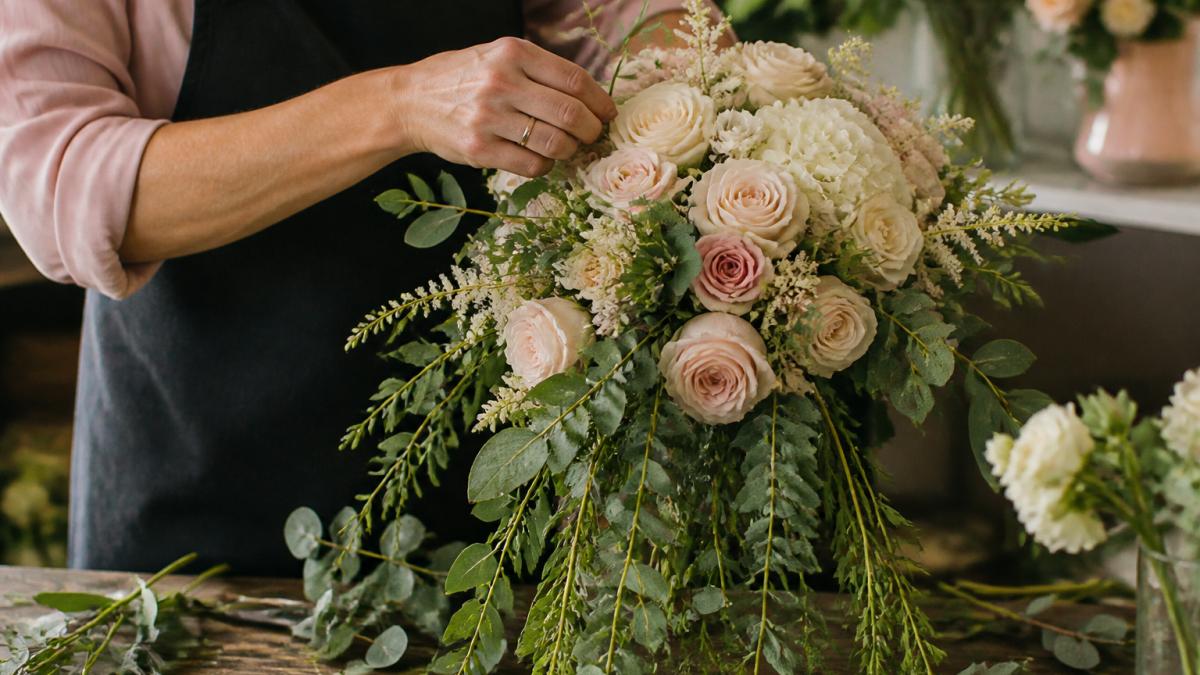
Look for Consistency in Design Philosophy and Execution
A strong portfolio shows the florist's design point of view. Look for:
- Consistent quality: Are the arrangements well-constructed and long-lasting looking?
- Design coherence: Do arrangements from different weddings feel like they come from the same designer?
- Technical skill: Are stems properly conditioned? Is greenery used intentionally? Are proportions balanced?
- Variety within a style: Can the florist adapt their aesthetic to different venues and color palettes?
If every wedding looks identical, that's a red flag. You want a florist who can interpret your vision, not impose their own.
Assess How Well Their Past Work Matches Your Style
This is where your mood board becomes essential. Compare your inspiration images to the florist's portfolio. Do they overlap? Can you see your style reflected in their work?
If you love romantic, garden-style flowers but the florist specializes in modern minimalism, it's probably not a good match.
Ask the florist directly: "Have you done weddings in this style before? Can you show me examples?" If they hesitate or show only one or two examples, consider other options.
Questions to Ask Your Wedding Florist During Consultation
A consultation is your chance to assess whether a florist understands your vision and can execute it. Come prepared with specific questions.
Clarify Design Process, Timeline, and Customization Options
Ask these questions:
- How do you develop a floral design? (Do they sketch? Create samples? Walk through options?)
- Can I request changes after seeing initial designs?
- How much customization is possible within my budget?
- What's your timeline for finalizing designs?
- When do you source flowers?
- How do you ensure freshness on wedding day?
A florist who asks about your vision, venue, and style is someone who cares about the outcome. A florist who talks mainly about their process might be less flexible.
Discuss Budget, Delivery, and Contingency Planning
Be direct about budget. A good florist will work within your constraints and be honest if your vision requires a higher investment.
Ask about delivery logistics:
- What's included in your delivery fee?
- What time will flowers arrive?
- Who sets up arrangements at the venue?
- What happens if flowers are damaged in transit?
- Do you have backup flowers in case something wilts?
Contingency planning matters. Weather, supply chain issues, or venue changes can happen. A professional florist has plans for these scenarios.
Luxury Wedding Floral Design Trends for 2026
Modern luxury weddings are moving away from overstuffed, maximalist arrangements.
Textured greenery is having a moment. Beyond basic eucalyptus, designers are using ruscus, Italian ruscus, seeded eucalyptus, and unexpected foliage.
Monochromatic palettes feel luxurious and modern. A wedding in all whites, all blushes, or all jewel tones looks cohesive and intentional.
Locally-sourced and seasonal flowers are increasingly valued. Couples want to know where their flowers come from.
Statement pieces matter more than filler.
Sustainable and Accessible Floral Choices
Sustainability in wedding flowers means considering the environmental impact of your choices. Imported flowers require air transport, which has a carbon footprint.
Ask your florist about their sourcing practices. Do they work with local growers? Do they compost leftover flowers? Do they reuse containers?
Accessibility matters too. Some guests have severe allergies to pollen (Climate change, air contaminants, and your health). Heavily scented flowers can trigger migraines (pubmed.ncbi.nlm.nih.gov).
Consider preserved flowers for some arrangements. Preserved flowers last longer, reducing waste.
Luluthia Design Inc offers both fresh and preserved floral collections, giving you flexibility in how you approach sustainability and longevity.
Finalizing Your Florist Choice and Timeline
Once you've chosen a florist, confirm everything in writing. Your contract should specify:
- Final floral designs and quantities
- Delivery date, time, and location
- Setup responsibilities
- Payment schedule
- Contingency plans
- Cancellation policy
A typical timeline works like this:
- 6-9 months before: Narrow down florist choices, book your top pick
- 3-4 months before: First consultation and design discussion
- 6-8 weeks before: Finalize designs and color palette
- 2-4 weeks before: Final confirmations and any adjustments
- 1 week before: Final payment and delivery logistics confirmed
Don't rush this process. A florist who knows your vision well in advance can source better flowers and execute with more care.
To choose wedding florist style effectively means starting with clarity about what you love, then finding a florist whose expertise and aesthetic align with your vision. Take time with your mood board. Ask specific questions during consultations. Look beyond pretty photos to assess consistency and skill.
At Luluthia Design Inc, we understand that every wedding is unique. Whether you're drawn to romantic garden-style arrangements, modern minimalism, or rustic elegance, we customize every detail to match your aesthetic and venue. Explore our luxury floral collections to see how we bring wedding visions to life.
| Floral Style | Best For | Key Characteristics | Primary Flowers |
|---|---|---|---|
| Classic | Formal, traditional weddings | Structured, symmetrical, timeless | Roses, hydrangeas, calla lilies |
| Romantic | Intimate, garden-inspired weddings | Soft, loose, abundant greenery | Peonies, garden roses, ranunculus |
| Boho | Outdoor, non-traditional venues | Organic, wildflower-inspired, dried elements | Wildflowers, grasses, branches |
| Modern | Contemporary, minimalist weddings | Clean lines, bold colors, architectural | Anthuriums, proteas, structured stems |
| Rustic | Barn, garden, farmhouse venues | Natural textures, warm tones, farmhouse charm | Sunflowers, dahlias, wheat |
Frequently Asked Questions
How do I determine my personal wedding floral style?
Start by gathering inspiration photos from weddings, magazines, and social media that resonate with you. Notice patterns in color, flower types, and overall mood. Are you drawn to lush, organic arrangements or minimalist designs? Classic roses or wildflowers? Create a mood board and share it with your florist. This visual reference is far more effective than describing your style in words alone, and it helps your florist understand whether you prefer structured elegance, romantic abundance, or modern simplicity.

What questions should I ask a wedding florist to ensure they match my vision?
Ask how they approach custom design, whether they've worked with your venue before, and how they handle seasonal flower substitutions. Request their process for revisions and ask to see examples of weddings similar to your style. Clarify the timeline for final design approval, delivery logistics, and what happens if flowers arrive damaged. Discuss allergies, accessibility needs, and whether they offer consultation services to refine your vision before the wedding day itself.
When should I book my wedding florist?
Ideally, book your florist 6 to 9 months before your wedding, especially for luxury, bespoke designs. This allows time for detailed consultations, mood board development, and design refinement. If you're planning a wedding during peak season (May through September), book even earlier. A full-service florist who customizes arrangements needs adequate lead time to source premium flowers and coordinate with other vendors to ensure your floral style complements your overall wedding aesthetic.
How much should I budget for luxury wedding floral installations?
Luxury wedding florals typically range from $2,500 to $8,000 CAD or more, depending on guest count, arrangement complexity, and venue size.
