
Table of Contents
- Why Preserved Flowers Last Longer Than Fresh Blooms
- How Preserved Flowers Are Made
- How Long Do Preserved Flowers Last
- Preserved Flowers vs Dried Flowers: Key Differences
- Preserved Flower Care: Maintaining Beauty Over Time
- Why Choose Preserved Flowers for Your Home or Office
- Conclusion
- Frequently Asked Questions
Last Updated: October 20, 2026
Why Preserved Flowers Last Longer Than Fresh Blooms
Preserved flowers outlast fresh blooms by months or years due to the stabilization process that occurs within the plant tissue after harvest.
A cut flower is living tissue. Once severed, the water column in the stem breaks, leading to a loss of turgor pressure and petal collapse. Enzymes drive browning, and remaining moisture can feed bacteria and mold. Preservation interrupts this natural decay sequence at the cellular level through two primary routes:
- Moisture replacement (glycerin and similar stabilizing solutions). The flower's vascular system absorbs a water-and-glycerin mixture. Glycerin is hygroscopic, meaning it attracts and retains moisture. It moves into the cells where water would normally reside, keeping the cell structure intact. This maintains petal pliability, slows enzymatic browning, and preserves the flower's shape.
- Moisture removal (silica gel, air-drying, and other desiccants). This method aims to reduce the water activity to a level where bacteria, fungi, and browning enzymes cannot function. Below a critical moisture threshold, microbial growth essentially ceases, resulting in a dry, stable structure. The trade-off is that removing water also removes the turgor that keeps petals soft, making desiccant-dried flowers feel crisp and prone to shattering.
Preservation does not render a flower immortal; pigments can still fade under ultraviolet light, proteins degrade slowly over time, and handling can cause damage. However, it significantly extends their lifespan, often by years instead of days.
How Preserved Flowers Are Made
Preserved flowers are created through specialized techniques that halt natural decay, with each method targeting the factors that cause a flower to deteriorate.
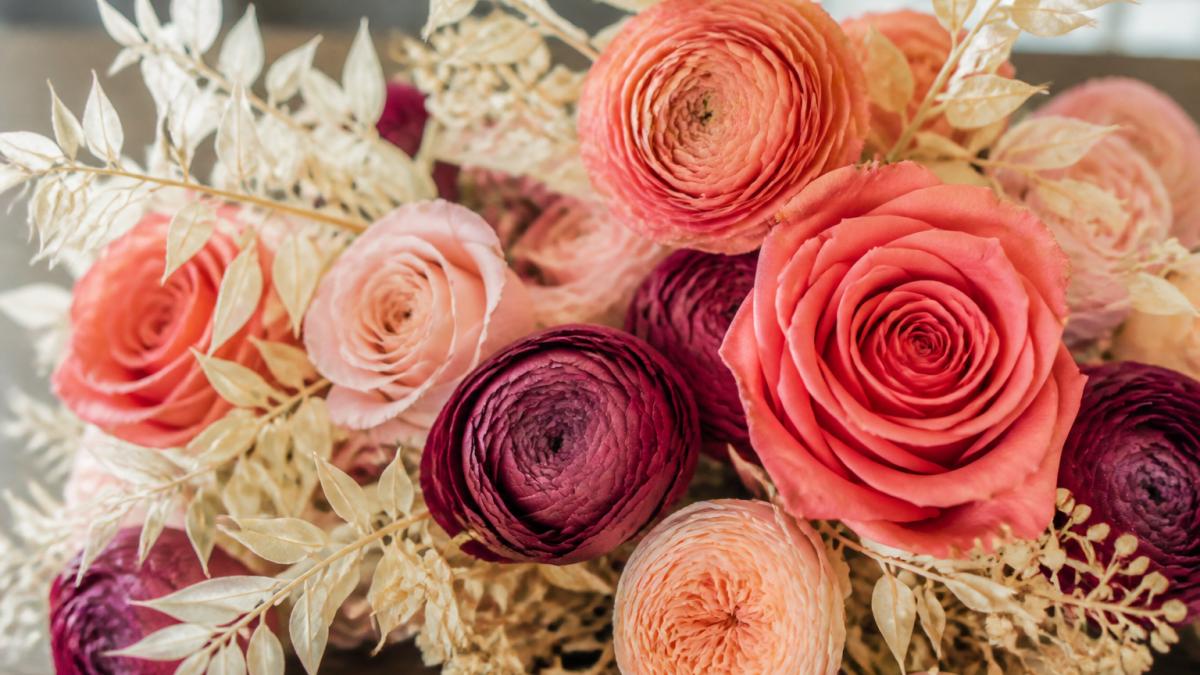
Glycerin Treatment: Replacing Water with Stabilizing Solution
In glycerin treatment, fresh flowers are immersed in a water-and-glycerin solution. The stems absorb this mixture, which then travels up into the petals and leaves.
As glycerin permeates the vascular system, it replaces the water that would otherwise break down over time, thereby preserving the cell structure. This keeps the petals pliable rather than brittle, and the color often deepens slightly.
This process typically takes one to three weeks, after which the flowers are gently dried. They require no water and can last one to three years with proper care, a method that works particularly well for roses, ranunculus, and dahlias.
Silica Gel: Absorbing Moisture to Prevent Decay
Silica gel functions as a desiccant. When flowers are buried in its crystals, it effectively draws moisture directly from the petals and foliage.
Within three to seven days, the flowers become dry, containing minimal water. This absence of water prevents the growth of bacteria and fungi, thus preserving the flower's shape and color.
Silica gel is ideal for delicate flowers such as baby's breath, small roses, and filler flowers, as it preserves fine detail and true color. However, silica-dried flowers are more fragile and can become brittle if handled roughly or exposed to very dry air.
The typical lifespan for silica-dried flowers is two to five years, contingent on storage conditions and ambient humidity levels.
Air-Drying: A Gentle Alternative Method
Air-drying is the most straightforward preservation technique. Flowers are hung upside down in a dark, dry, well-ventilated space, allowing them to lose moisture over a period of two to four weeks.
This method requires no chemicals or specialized equipment. While slow drying helps maintain shape, colors tend to fade more noticeably, with greens and pale tones losing vibrancy.
Air-dried flowers generally last one to three years and are well-suited for sturdy structures like pampas grass, wheat, and certain varieties of roses. Their softer, muted tones lend themselves to rustic or vintage aesthetics.
How Long Do Preserved Flowers Last
An arrangement's longevity is influenced by the preservation method employed and the care it receives.
Lifespan by Flower Type and Preservation Method
Some flowers retain their color and texture for years, while others may fade or become brittle more rapidly.
| Flower Type | Glycerin Method | Silica Gel Method | Air-Dried Method |
|---|---|---|---|
| Roses | 2-3 years | 2-4 years | 1-2 years |
| Ranunculus | 1-2 years | 2-3 years | 1-2 years |
| Dahlias | 1-2 years | 2-3 years | 1-2 years |
| Baby's Breath | 1-2 years | 3-5 years | 2-3 years |
| Pampas Grass | 2-3 years | N/A | 3-5 years |
These estimates assume proper storage and handling. Flowers maintained in ideal conditions often exceed these expected lifespans. Conversely, those exposed to direct sunlight, high humidity, or significant temperature fluctuations may deteriorate more quickly.
Factors That Affect Longevity
Several environmental and handling factors play a role in how long preserved flowers last.
Humidity is a primary concern. High humidity can cause silica-dried flowers to absorb moisture, become soft, or develop mold. While glycerin-treated flowers are more resilient, they too can fade faster in damp conditions.
Light exposure leads to color fading. Direct sunlight accelerates this process, and prolonged exposure can result in noticeable color loss within months.
Temperature swings stress the flower's structure. A stable room temperature, ideally around 18-21°C, is most beneficial.
Physical handling is also important. Frequent touching, constant repositioning, or placing arrangements in high-traffic areas where they might be bumped can lead to breakage or bruising.
Air quality matters. Dust and pollutants can accumulate on flowers, promoting deterioration. Keeping arrangements in clean spaces and dusting them occasionally with a soft brush is recommended.
Preserved Flowers vs Dried Flowers: Key Differences
While the terms "preserved" and "dried" are often used interchangeably, they denote distinct processes and outcomes.
Dried flowers have had their moisture removed through methods like air-drying, oven-drying, or other heat-based techniques. This process typically results in brittle textures, noticeable color fading, and a lighter weight. Dried flowers are generally more affordable and suit rustic, vintage, or bohemian aesthetics.
Preserved flowers, on the other hand, are treated with glycerin or other stabilizing solutions. This process maintains the cell structure, retaining much of their original texture and color vibrancy.
The fundamental difference lies in the stabilization: dried flowers are simply dehydrated, while preserved flowers undergo a chemical stabilization process designed to mimic the appearance and feel of fresh flowers as closely as possible.
Preserved Flower Care: Maintaining Beauty Over Time
Preserved flowers require significantly less maintenance than fresh blooms, but "low maintenance" does not equate to "no maintenance." The difference between an arrangement that remains attractive for one year versus five often comes down to a few key environmental factors and prompt attention to early signs of deterioration.
Environmental Conditions and Humidity Control
The most critical factor influencing longevity is the ambient moisture level.
A relative humidity range of 30-50% is considered optimal. Below approximately 30%, desiccant-dried flowers can become brittle and prone to shattering. Above roughly 60%, the risk of mold growth increases sharply, particularly for air-dried and silica-dried arrangements.
Temperature should remain stable, ideally between 18-21°C. Consistency is more important than the exact temperature, as repeated fluctuations between warm and cool can stress petals and stems through expansion and contraction.
Good air circulation is beneficial, but direct drafts should be avoided.
In spaces with high humidity, such as basements, coastal environments, or bathrooms, a glass dome or display case can create a beneficial microclimate.
Protecting from Sunlight and Physical Damage
Ultraviolet light is the primary culprit for color fading. While pigments in preserved flowers are more stable than in fresh ones, they are not entirely immune to its effects.
Physical damage is another common cause of deterioration. Desiccant-dried flowers are brittle and can crack or shatter if bumped. Glycerin-treated flowers are more pliable but can still bruise or shed petals with repeated handling.
Dusting with a soft brush, a camera lens blower, or using low-pressure compressed air every few months is recommended. Avoid using a damp cloth, as water is detrimental. Also, refrain from using cleaning sprays near the arrangement.
Troubleshooting Deterioration
Most issues with preserved flowers fall into a few distinct categories.
Fading: Gradual color loss over years is a natural process and cannot be reversed.
Mold: Look for fuzzy gray, white, or black patches, a musty odor, or petals that feel damp and limp.
Brittleness and Shattering: Desiccant-dried flowers become brittle in overly dry air or from rough handling.
Petal Loss: Some shedding is normal over time, particularly with air-dried arrangements.
When Damage Cannot Be Reversed: Fading, mold that has penetrated the tissue, and brittleness are generally permanent issues.
Why Choose Preserved Flowers for Your Home or Office
Preserved flowers offer distinct advantages that fresh flowers cannot match, making them ideal for individuals seeking lasting beauty without the demanding maintenance.
Fresh flowers require daily water changes, stem trimming, and careful handling, with a typical lifespan of one to two weeks. Preserved flowers, in contrast, necessitate none of these tasks.
For office environments, preserved flowers are highly practical. They do not require a water source, nor do they wilt or shed petals onto desks. They consistently contribute to a polished, professional ambiance.
In homes, preserved flowers enhance any room. They are perfect for entryways, bedrooms, and living spaces where a lasting visual impact is desired.
At Luluthia Design Inc, we craft preserved arrangements that infuse spaces with luxury and sophistication. Our collections, such as The Wild One, a striking arrangement featuring pampas, eternal roses, curly willow, and silk white delphinium, demonstrate how preserved flowers can elevate interior design. For smaller areas, Bebe presents a delicate preserved bouquet of bunny tail, eternal roses, pussy willow, and bleached ruscus, adding softness and elegance to any corner.


If you are searching for a gift that endures, our Blush Pink eternal rose, presented in a glass dome, preserves its beauty for up to three years, serving as a meaningful keepsake. Alternatively, consider Our Signature Beauty, a single extra-large eternal rose with a golden stem encased in a glossy dome, a statement piece that conveys enduring affection.

Conclusion
Preserved flowers are intentionally designed for longevity. By replacing natural water content with stabilizing solutions or removing moisture entirely, the preservation process halts the decay that affects fresh flowers. The outcome is arrangements that maintain their beauty for years rather than days.
Whether opting for glycerin treatment, silica gel, or air-drying, preserved flowers offer enduring value and aesthetic appeal. They require minimal upkeep, complement any décor style, and make thoughtful gifts that last.
Frequently Asked Questions
Why do preserved flowers last longer than fresh flowers?
Preserved flowers last longer because preservation methods remove the water content that causes decay and wilting. By replacing water with glycerin or absorbing moisture with silica gel, the flower structure remains intact and stable. Without water, bacteria and fungi cannot thrive, halting the natural decomposition process. This allows preserved flowers to maintain their color, shape, and texture for years rather than days.
How long do preserved flowers actually last?
Preserved flowers typically last 1 to 3 years or longer, depending on the preservation method and flower type. Glycerin-treated flowers and those preserved with silica gel generally last 2 to 3 years. Air-dried flowers may last 1 to 2 years. Roses, ranunculus, and baby's breath preserve exceptionally well. Proper care, keeping them away from direct sunlight, humidity extremes, and physical damage, extends their lifespan significantly.
What is the difference between preserved and dried flowers?
Preserved flowers are treated with glycerin or specialized solutions that maintain their natural color, softness, and shape. Dried flowers lose moisture naturally through air-drying, which often causes fading and brittleness. Preserved flowers feel supple and retain vibrant hues, while dried flowers appear muted and fragile. Preserved flowers typically last longer and maintain their aesthetic appeal better than dried alternatives, making them ideal for luxury arrangements.
Do preserved flowers need any special care?
Preserved flowers require minimal care but benefit from proper storage conditions. Keep them away from direct sunlight to prevent fading, maintain humidity levels between 30-50%, and avoid excessive moisture or damp environments. Do not water preserved flowers; they contain no living plant tissue and water can cause deterioration. Display them in a clean, dust-free location, and handle gently to prevent petal damage. With these simple precautions, your preserved arrangement will remain beautiful for years.
Preserved flowers represent a shift from temporary beauty to lasting luxury. At Luluthia Design Inc, we specialize in crafting preserved arrangements that enhance your home or office for years to come. Explore our curated collection of preserved blooms and discover the timeless elegance that only preserved flowers can deliver. Shop flowers with Luluthia Design Inc today and bring enduring beauty into your space.