
Table of Contents
- Why Long Lasting Flowers Belong in a Luxury Interior
- The Longest Lasting Fresh Cut Flowers for Your Home
- How to Care for Cut Flowers: A Step-by-Step Routine
- Preserved Roses for Home Decor: A Year-Round Alternative
- Water Chemistry, Pet Safety, and What Most Guides Skip
- Sustainable Luxury Floral Design Trends for 2026
- Conclusion
- Frequently Asked Questions
Last Updated: September 28, 2026
Why Long Lasting Flowers Belong in a Luxury Interior
Long lasting flowers are the quiet workhorses of a well-designed room. They hold their shape, their color, and their presence for far longer than a standard bouquet, which is exactly why they've become a staple in homes that treat floral art as part of the decor rather than a weekly errand. At Luluthia Design Inc, we've watched this shift firsthand: clients no longer want flowers that look tired by Thursday. They want arrangements that earn their place on the console table for weeks, not days.
The reason comes down to biology. Fresh cut flowers begin to decline the moment they're separated from the plant, a process known as flower senescence, and how quickly that happens depends on the variety, the stem's hydration, and the environment around it. Choose the right blooms and care for them properly, and you can stretch a single arrangement well past the two-week mark.
Below, we'll walk through the varieties that genuinely last, the care routine that keeps them alive, and the preserved options that skip the maintenance entirely.
The Longest Lasting Fresh Cut Flowers for Your Home
The longest lasting cut flowers are those with naturally woody stems, dense petals, and low water demands. These varieties resist wilting and hold their color longer than delicate blooms like tulips or peonies.
Top Varieties That Hold Their Shape and Color
If you want an arrangement that still looks intentional after ten days, start here:
- Chrysanthemums - Dense, layered petals that resist bruising and can last two to three weeks with clean water.
- Carnations - A classic for a reason. Sturdy stems and slow-opening blooms give them remarkable staying power.
- Orchids (Phalaenopsis) - As a cut stem, orchids hold for two weeks or more and read as effortlessly elegant.
- Alstroemeria - Sometimes called Peruvian lilies, these produce multiple blooms per stem that open in sequence.
- Lilies - As buds open over several days, lilies deliver a long, evolving display.
- Roses - Quality roses with firm heads last well over a week, and preserved eternal roses last dramatically longer.
- Eucalyptus and curly willow - Foliage that dries beautifully and adds architectural structure.
A common mistake is judging longevity by looks alone. The most dramatic bloom isn't always the hardiest. Dense, waxy, or woody varieties consistently outlast soft-petaled ones.
Seasonal Blooms and What to Expect
Seasonal blooms tend to be fresher and better conditioned because they haven't traveled as far. Spring brings tulips and ranunculus, which are beautiful but shorter-lived. Summer offers dahlias and sunflowers, gorgeous yet quick to wilt in heat. Autumn delivers chrysanthemums and hydrangeas at their peak. Winter favors amaryllis and orchids.
Buying in season doesn't just look better in a room. It means the stems start their vase life in stronger condition.
How to Care for Cut Flowers: A Step-by-Step Routine
Learning how to care for cut flowers is less about effort and more about consistency. A short, repeatable routine can add days to any arrangement, but the routine only works if you understand why each step matters. Most guides stop at "change the water." The real leverage is in water chemistry.
Total time: 10 minutes on day one, 3 minutes every other day.
What you'll need:
- A clean vase
- Sharp floral shears
- Fresh cool water (ideally filtered or distilled)
- Floral preservative
- A pH test strip (optional, but useful)
Step 1: Prep the vase. Wash it with hot, soapy water. Residual bacteria from a previous arrangement is one of the fastest ways to shorten vase life. Biofilm, the slick film that forms on glass, harbors the same bacteria that clog stem ends.
Step 2: Trim the stems. Cut at a 45-degree angle with sharp shears. This increases the surface area for stem hydration.
| Task | Frequency | Why It Matters |
|---|---|---|
| Change water | Every 2 days | Prevents bacterial growth |
| Re-cut stems | Every 2-3 days | Restores stem hydration |
| Remove wilted petals | As needed | Slows ethylene spread |
| Clean vase | With each change | Removes biofilm |
Water Chemistry: The Variable Most Guides Ignore
Water quality is the single most under-discussed factor in vase life. Two mechanisms are at work.
A Note on DIY Preservatives
If you want to skip the commercial packet, a common household substitute is a splash of clear lemon-lime soda (for sugar and acidity) plus a few drops of bleach (as the biocide) in fresh water. It is not as precise as a formulated preservative, but it addresses the same three levers, acid, sugar, and bacteria, that commercial products do. Change the solution every two days regardless of which route you choose.
Preserved Roses for Home Decor: A Year-Round Alternative
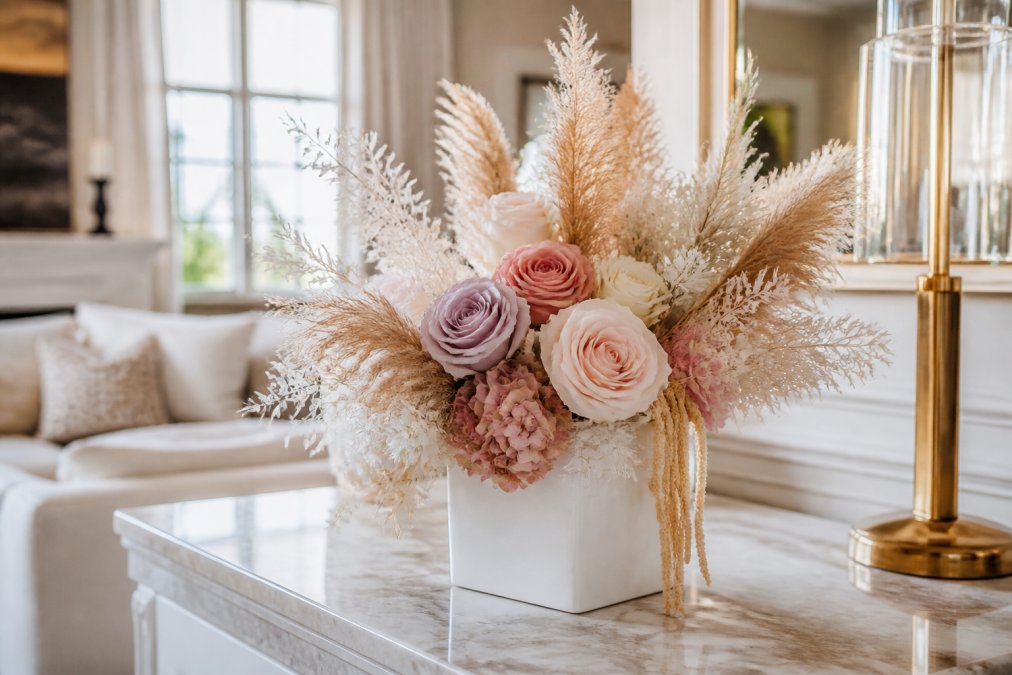
Preserved roses for home decor solve the one problem fresh flowers can't: they don't need care. Eternal roses are real roses that have been naturally preserved, keeping their soft texture and color for years rather than days.
Water Chemistry, Pet Safety, and What Most Guides Skip
Two things separate a good floral guide from a genuinely useful one: pet safety and post-bloom repurposing. Most care advice stops at "change the water" and "throw them out when they wilt." That leaves two real gaps unaddressed.
Pet-Safe Long-Lasting Flowers
Common long-lasting flowers that are toxic to pets:
- Lilies, especially dangerous to cats. Even minor exposure to pollen, leaves, or vase water can cause serious kidney injury. Many veterinary sources treat any lily in a cat household as a medical emergency.
- Chrysanthemums, contain pyrethrins that can cause vomiting, drooling, and incoordination in cats and dogs.
- Alstroemeria (Peruvian lilies), can cause gastrointestinal upset in cats and mild skin irritation in dogs.
- Carnations, generally mild, but can cause gastrointestinal upset if chewed.
- Hydrangeas, contain cyanogenic glycosides and are toxic if ingested.
Long-lasting flowers that are generally considered pet-safe:
- Roses, thornless varieties are safest; thorns are a physical hazard, not a toxic one.
- Orchids (Phalaenopsis), widely regarded as non-toxic to cats and dogs.
- Snapdragons, considered non-toxic, though not as long-lasting as chrysanthemums.
- Sunflowers, non-toxic, though shorter-lived.
- Eucalyptus, often listed as safe in small amounts, but concentrated oils can be irritating; keep dried stems out of reach.
For households where the risk isn't worth managing, preserved arrangements and dried bouquets sidestep the issue entirely, they contain no fresh plant material that a pet can chew.

Post-Bloom Repurposing: Getting More From Every Arrangement
Most guides end at "when they die, compost them." That leaves value on the table. Long-lasting arrangements are built from materials that often outlive the fresh blooms by months.
- Dried eucalyptus and curly willow, move them to a new vessel once the fresh stems fade. Both dry in place and hold their shape and scent for months.
- Pampas and preserved grasses, already dried, so they simply transfer to a new arrangement or a standalone vase.
- Pressed blooms, chrysanthemums, pansies, and orchids press well. Place them between parchment paper under a heavy book for two to three weeks, then frame or use in card-making.
- Composting, fresh stems, leaves, and spent blooms break down quickly in a home compost bin. Remove any floral foam first; it does not biodegrade.
Sustainable Luxury Floral Design Trends for 2026
Sustainable luxury floral design trends are reshaping how high-end arrangements are built. The shift is toward fewer, more considered stems and materials that don't need replacing every week.
Three directions stand out this year:
- Preserved and dried compositions that last months or years, reducing waste and repeat deliveries.
- Locally sourced seasonal stems that arrive fresher and travel shorter distances.
- Sculptural, minimal arrangements that use negative space and architectural foliage rather than volume.
Conclusion
The gap between a bouquet that lasts four days and one that lasts three weeks comes down to variety selection, water hygiene, and placement. Get those three right, and your flowers stop being a weekly expense and start being decor. For rooms where fresh care isn't realistic, preserved arrangements from Luluthia Design Inc offer eternal roses, pampas, and curly willow that hold their beauty for years with no maintenance.
SHOP FLOWERS
Frequently Asked Questions
What house flowers last the longest in a vase?
Fresh cut flowers like chrysanthemums, carnations, and lilies can hold their shape for one to two weeks with proper care. For a longer option, preserved arrangements last months or even years without water. Trimming stems at an angle and changing the water every two days keeps fresh stems hydrated and slows bacterial growth that causes wilted petals.
What are the best preserved flower options for home decor?
Preserved roses, pampas grass, and dried bouquets are popular choices because they hold their color and shape without water or sunlight. A preserved arrangement in a glass vase or ceramic container works well as a permanent focal point on a console or dining table. These pieces suit modern and classic interiors alike and need only occasional dusting with a soft brush.
How can I extend the life of my floral arrangements?
Start by re-cutting stems at a 45-degree angle, removing all foliage below the water line, and using a clean vase. Change the water every two days and keep the arrangement away from direct sunlight and ripening fruit, which releases ethylene gas. A floral preservative can slow flower senescence, but regular water changes matter just as much for stem hydration.
What is the difference between fresh-cut and preserved floral art?
Fresh-cut flowers need water, trimming, and regular maintenance to stay vibrant for one to two weeks. Preserved floral art uses a treatment process that replaces the plant's moisture, so the blooms keep their appearance for months or years with no watering. Preserved pieces cost more upfront but offer a longer return for anyone who wants lasting beauty at home.